Showing posts with label Olympus. Show all posts

Thursday, January 12, 2023

OlyPen II

 It was just before Christmas 2021 that I got my first Olympus Pen half-frame camera, an Olympus Pen D3 (https://misc.fords.co.nz/2022/01/olympus-pen-d3.html). I ran several rolls of film through that camera and, at the time, loved using it more than any of my other cameras (film or digital). The 32mm f1.7 lens was remarkably sharp and I got amazingly crisp and clear pictures from such a small frame size. Then, one day, the ‘click’ didn’t, and on investigation I found the shutter blades lying in a heap in the middle of the lens. The OlyPen had died.

Christmas 2022, bought OlyPen II to my door. It is a Pen EED model with fully automated exposure and that same 32mm f1.7 lens that I loved on the Pen D3. The Pen EED was manufactured between 1967 and 1972, though you wouldn’t know it to look at my copy. It has a much more modern design than the Pen D3 and I was fortunate to find one in immaculate condition.

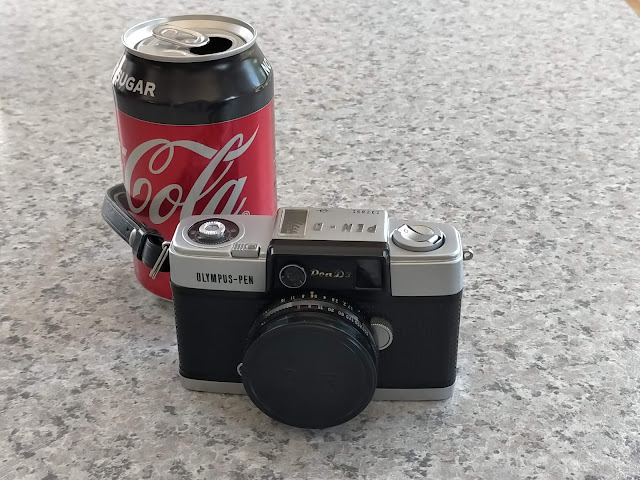
Olympus Pen EED (1967-1972)

Aside from being small and portable, all the OlyPens, and most half-frame film cameras in general, have one unusual feature - when you hold them naturally, they take pictures in the portrait orientation, rather than the more common landscape. If you want landscape on an OlyPen, you must turn it sideways. 

This portrait orientation is no minor detail. It wasn't until I first used the OlyPen D3 that I realised that I naturally preferred portrait orientation. This natural preference, however, had always been suppressed by the poor ergonomics of holding my other cameras sideways. Once I used the OlyPen, I went from 80% landscape to shooting 95% portrait. The portrait orientation also lends itself to a diptych or triptych series in a way that landscape pictures don't. 
At the skate-park

Being half-frame images, the negatives from the OlyPen are never going to hit the heights of medium format for quality, nor even a good full-frame 35mm camera, but that isn't the OlyPen's purpose. The OlyPen is a carry-everywhere snapper - if artists carry a sketchbook, then the OlyPen is the photographer's sketchbook. Having said that, the OlyPen produces 20Mp scanned images that easily hold their own on social media and anything up to an 8"x10" print; thanks largely to that wonderful Olympus lens.
Mexican dominoes

I expect to have a lot more fun playing with the little OlyPen II. Hopefully, it will last a lot longer than my broken D3 before it gets taken to camera heaven.
Playing in the playground with the OlyPen

OlyPen photos were taken on either Fomopan 100 or Ilford FP4, developed in Rodinal, semi-stand for 1hr.


Sunday, February 6, 2022

Falling in love again ...

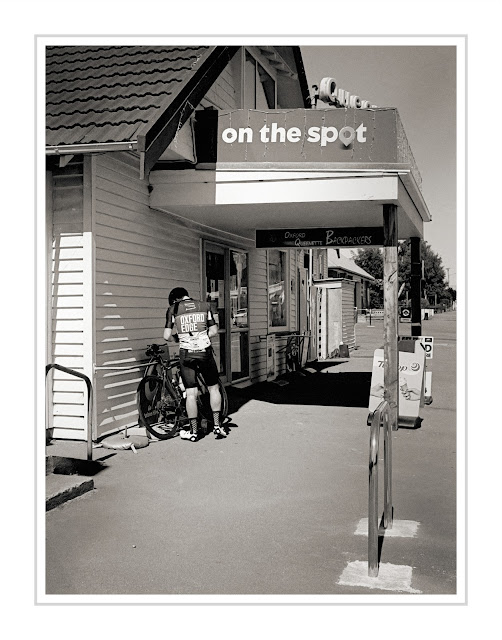
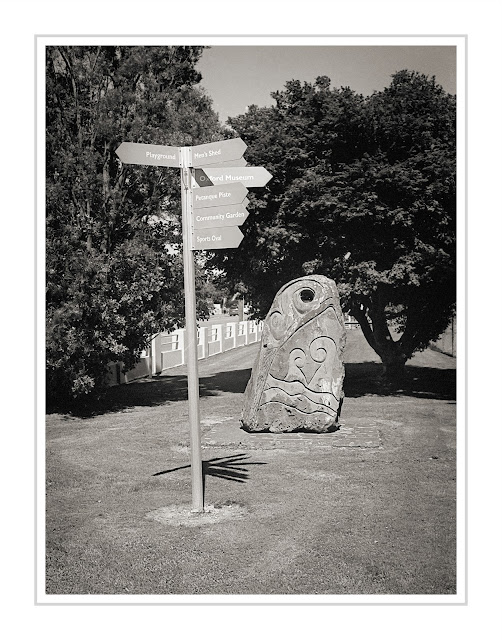
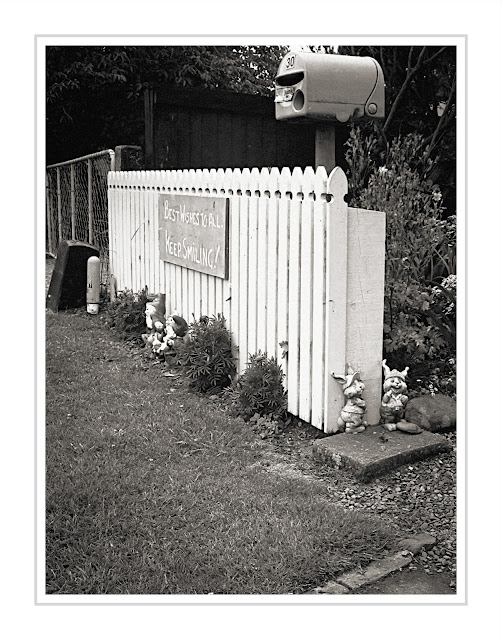
Yes, definitely in love again. It's OlyPen's fault, I just love going out taking photographs with this little camera. Five rolls of film (about 300 images) and my 'better' cameras are moping around at home feeling sorry for themselves. The latest trial was a roll of HP5 - Ilford's gritty, blue-collar, cousin of its more sophisticated FP4. It didn't disappoint.  I picked 12 shots out of the 46 I got from this roll. (Click on any image for a larger version.)

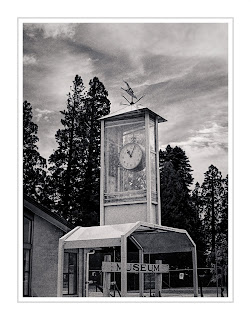
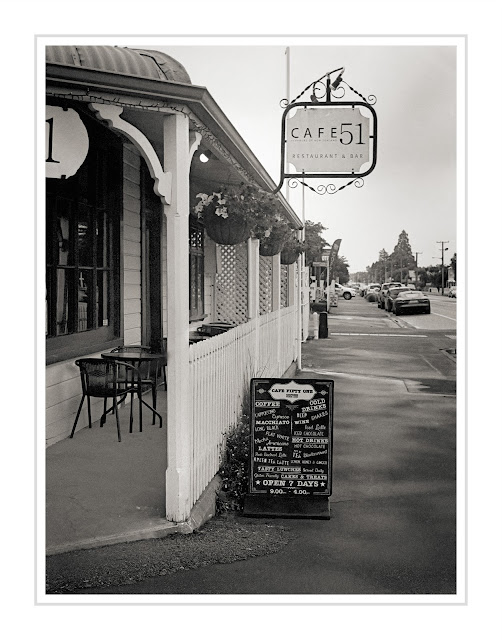
All these pictures were taken within 500 meters of our front gate, and the tight view from the OlyPen's fixed lens, seems perfect for creating these little abstractions from our home town. The familiarity of home can easily breed a sort of contempt due to its routine ordinariness but, being forced to look closer uncovers the unique, the fleeting and the juxtaposition of ordinary with ordinary, that sometimes makes for 'wonderful'.


Saturday, January 8, 2022

Olympus Pen D3


Until you hold an Olympus Pen camera in your hand, it is hard to imagine just how small they are.  Pictures show a perfectly proportioned 35mm film camera (which it is) but in the hand, it is quite diminutive - smaller even than my everyday digital Fujifilm cameras, the X-M1 and the X-E3 (themselves quite small).

The "Oly-pen" arrived just before Christmas and it took a couple of weeks to run through the first roll of film - not least of all because a standard 36 exposure film can accommodate 72 shots in the Oly-pen's half-frame format.  I had been concerned that the quality of the images, given the smaller negatives, wouldn't meet my normal standards. Usually, I get clean 24Mp images from standard 35mm film and, rather surprisingly, I found that the Oly-pen produced equally clean 20Mp files in a 4:3 aspect ratio (despite its size disadvantage).

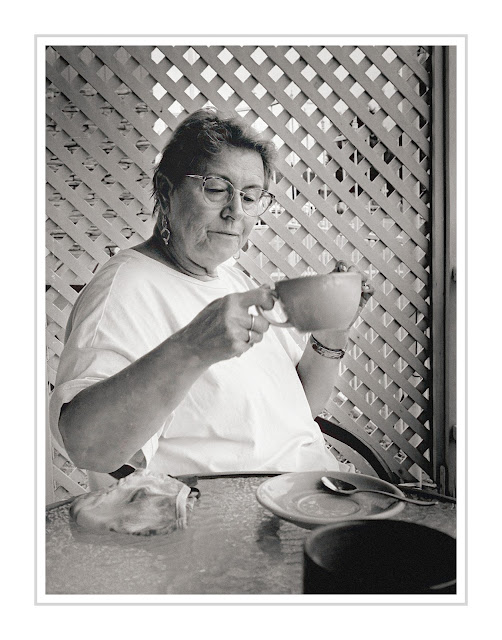
That first roll was a resounding success - despite this photographer's mess-up. Knowing that the light-meter would be reading incorrectly (due to an incorrect voltage battery) I compensated by adjusting the ISO. Only, dingbat that I am, I adjusted the ISO the wrong way, resulting in 72 frames that were about 3 stops underexposed. Despite this, the rescued shots all turned out remarkably well and demonstrated that the Oly-pen was a very useable camera.

Manufactured between 1965 and 1969, the Oly-pen D3 makes a great street camera, it is discrete and, using zone focusing, quick to use. With the appropriate exposure dialled in (not necessarily too accurately!) and the focus set, taking a shot is a simple wind, shoot ... wind, shoot, affair with an almost inaudible 'snick' as each shot is taken. 

Given its small size, ease of operation, fast and sharp f1.7 lens, and immense 'fun' factor, the Oly-pen is destined to become my everyday, casual photography, film-favourite.

Photos (except the first) were taken on Ilford FP4, developed in 'Caffenol' for 8 minutes, scanned and processed in Exposure X7.